|
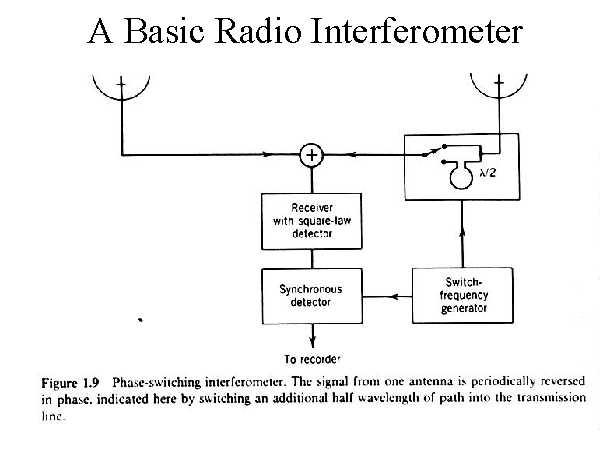
The next big advance in interferometers was the creation of the phase switching interferometer. This interferometer rapidly switches the antenna phases by 180 between samples. It alternately adds and subtacts the samples as it switches. The net effect of the this form of combining signals is that common mode noise (local noise heard by both antennas) is cancelled out. The result is a significantly better signal to noise ratio and the detetion of fainter sources. |
|
|